

The AI image generation landscape in 2026 has completely transformed. What felt cutting-edge just 12 months ago now looks like a first-generation prototype. If you create visual content for any purpose — design, marketing, social media, or personal projects — the changes happening right now will define how you work for the next several years.
Here is everything you need to know.
The Big Shift: From Single Tools to Integrated Pipelines
The most important change in 2026 is not a new model name. It is the way AI image generation has become embedded into entire creative workflows. In 2025, you used a separate tool for each task — one app for images, another for video, another for audio. In 2026, the best platforms let you move from a text prompt, to an image, to an animated video, and add music — all inside a single session.
This is called a multimodal pipeline, and it changes everything about how creators work.
GPT-4o Native Image Generation: The Event That Changed Everything
When OpenAI launched native image generation inside GPT-4o in early 2025, it redefined the entire category. The feature produced images that were conversationally steerable — you could say "make the background darker" or "add a person on the left" and the AI would understand the full context.
The response was immediate. Within the first week, approximately 700 million images were generated — roughly 1,200 images every single second. The viral Studio Ghibli trend, where users transformed their photos into anime-style illustrations, became one of the fastest-spreading AI trends ever recorded.
Every competitor had to respond. Google accelerated Gemini image capabilities. Midjourney expanded beyond Discord. The bar moved — permanently.
The 5 Biggest AI Image Trends of 2026
- Real-Time Generation Earlier tools required you to write a prompt, submit it, wait, and evaluate. Modern tools are approaching real-time feedback — the image updates as you modify the prompt. This turns prompt engineering from a guess-and-check cycle into a continuous creative conversation.
- Character Consistency One of the biggest pain points in AI image generation was that generating the same character twice produced two completely different results. In 2026, this problem has been largely solved. You can now maintain consistent characters, brand mascots, and recurring visual identities across entire campaigns.
- 4K Output as Standard Earlier models topped out at low resolution — fine for social media, but unusable for print or high-resolution banners. In 2026, 4K output is standard, not a premium feature. Professional-grade visuals for print, video backdrops, and advertising placements are now fully achievable with AI.
- Text Inside Images — Finally Fixed For years, AI tools failed at rendering readable text inside images. Words would blur, warp, or look completely wrong. In 2026, Ideogram and other models have largely solved this. Readable headings, labels, and UI copy inside AI-generated images are now reliable enough for real production work.
- Text-to-Image-to-Video Pipelines A static AI image is no longer the endpoint — it is the starting point. Modern tools can take any generated image and animate it with camera movement, subject motion, and environmental effects to produce short video clips. For social media creators, this means a single prompt can produce both a thumbnail image and a short video clip simultaneously.
The Major Players in 2026
Midjourney — Still the best for artistic, editorial, and concept work. Now available on web without Discord. GPT-4o — Best for conversational control and following complex descriptions precisely. Flux (Black Forest Labs) — Open-source, free, and increasingly powerful. Best for creators who want full control. Stable Diffusion — Best for high-volume generation, custom LoRA models, and complete customization. Ideogram — Best for any image that requires readable text. Gemini (Google) — Rapidly improving, deeply integrated with Google Workspace tools.
What This Means for Your Workflow
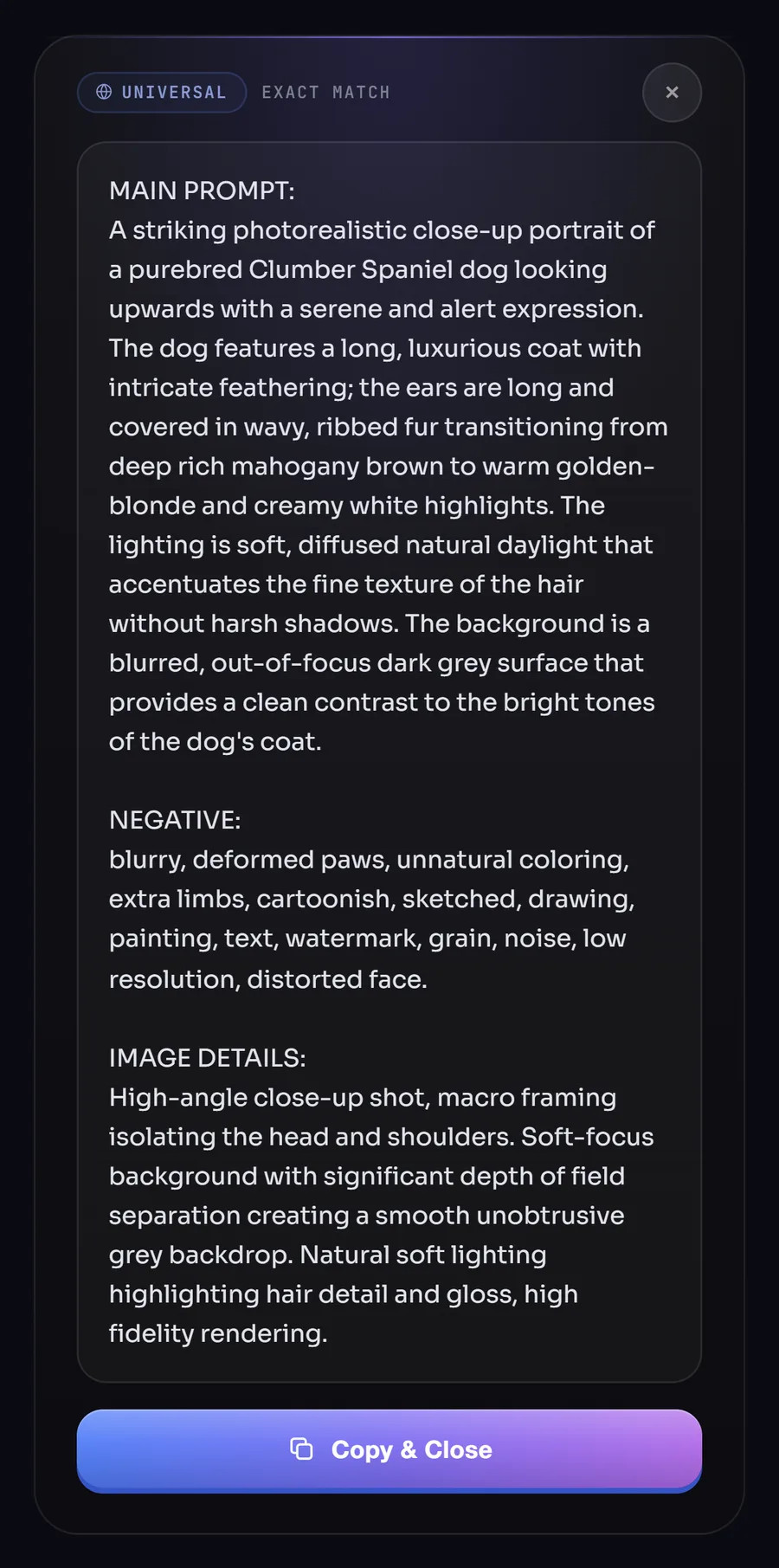
The creators winning in 2026 are not those chasing every new model. They are those building repeatable systems. Pick two or three tools that fit your workflow. Master prompt engineering — it is now the single most valuable creative skill. Use a tool like PromptMaster Pro to reverse-engineer the visual style of any image you admire, so you can replicate it instantly.
The creative bottleneck has shifted from "can the AI do this?" to "how well can I direct it?" Prompt engineering is the answer.
Copyright and Ethics: What You Need to Know
The legal landscape is becoming clearer. Most jurisdictions now treat AI as a tool — like a camera or Photoshop — which means the human directing the AI retains creative rights in most frameworks. Major platforms including Adobe, Microsoft, and Google have committed to C2PA watermarking standards, which embed information about how an image was created directly into the file.
For commercial use, always check the specific terms of service for your chosen platform. Midjourney Pro and Flux commercial licenses are the safest choices for paid client work.
How to Stay Ahead
The best thing you can do today is build fluency with current tools. Find images you love, use PromptMaster Pro to reverse-engineer their prompts, and study the patterns. You will learn more in one hour of active practice than from days of reading guides.
The AI image generation revolution is not slowing down. The creators who start building their skills now will have a compounding advantage over those who wait.